
SRIBIO · PRODUCT PROFILE
Biopesticides
Biological formulations for the crop and soil challenges described in each product profile.
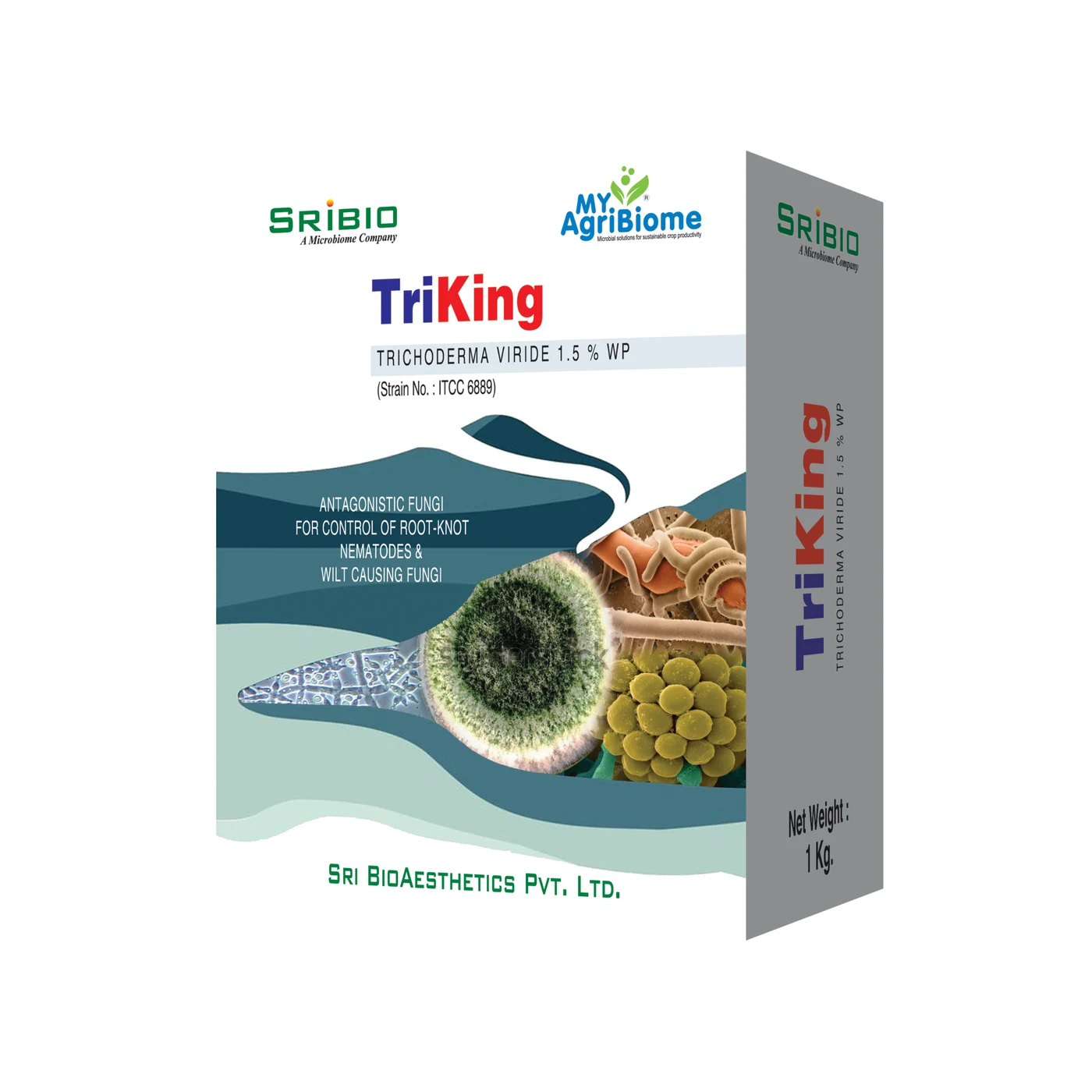
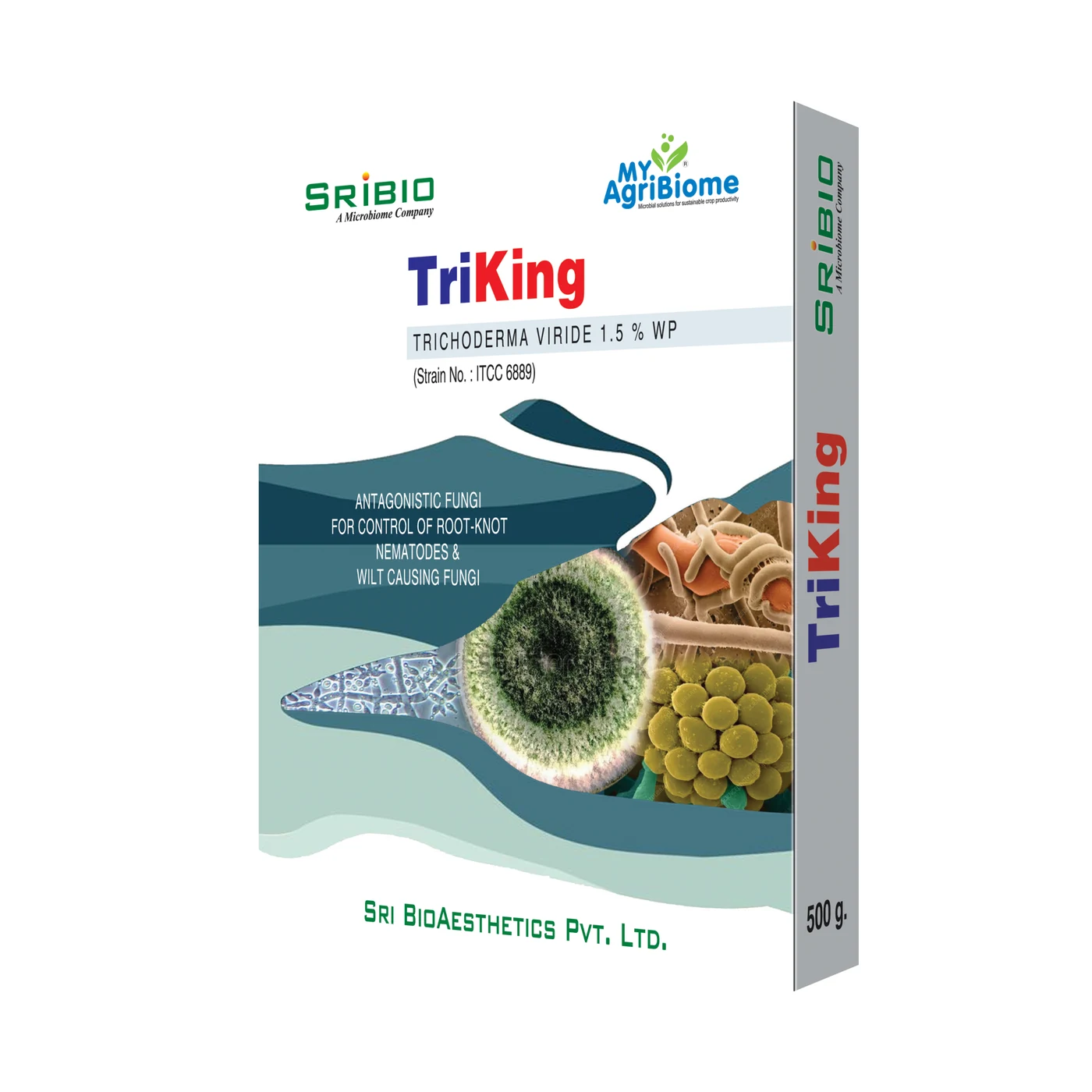
TriKing
Trichoderma viride 1.5% WP
Triking is a Bio-control Fungus which protects the root system against disease caused by soil borne pathogens.
Benefits
- TriKing Protects root zone from pathogenic fungi, enhances root and plant growth, improves nutrient use efficiency, and controls nematodes.
Dosage & usage
Treat the seeds with TriKing @ 20 G/ Kg of seed and treat the nursery beds @ 50 g/sq.m and apply 5 tons FYM enriched with 5 kg TriKing / ha to the soil before transplanting in Tomato and Okra for Root-knot nematode& Wilt causing fungi.
Enrichment of field yard manure (FYM) with bio agent: add 5 kg of TriKing to 5 ton of FYM or compost to enrich it with bio- pesticides.
Available packaging: 500 grams & 1000 grams
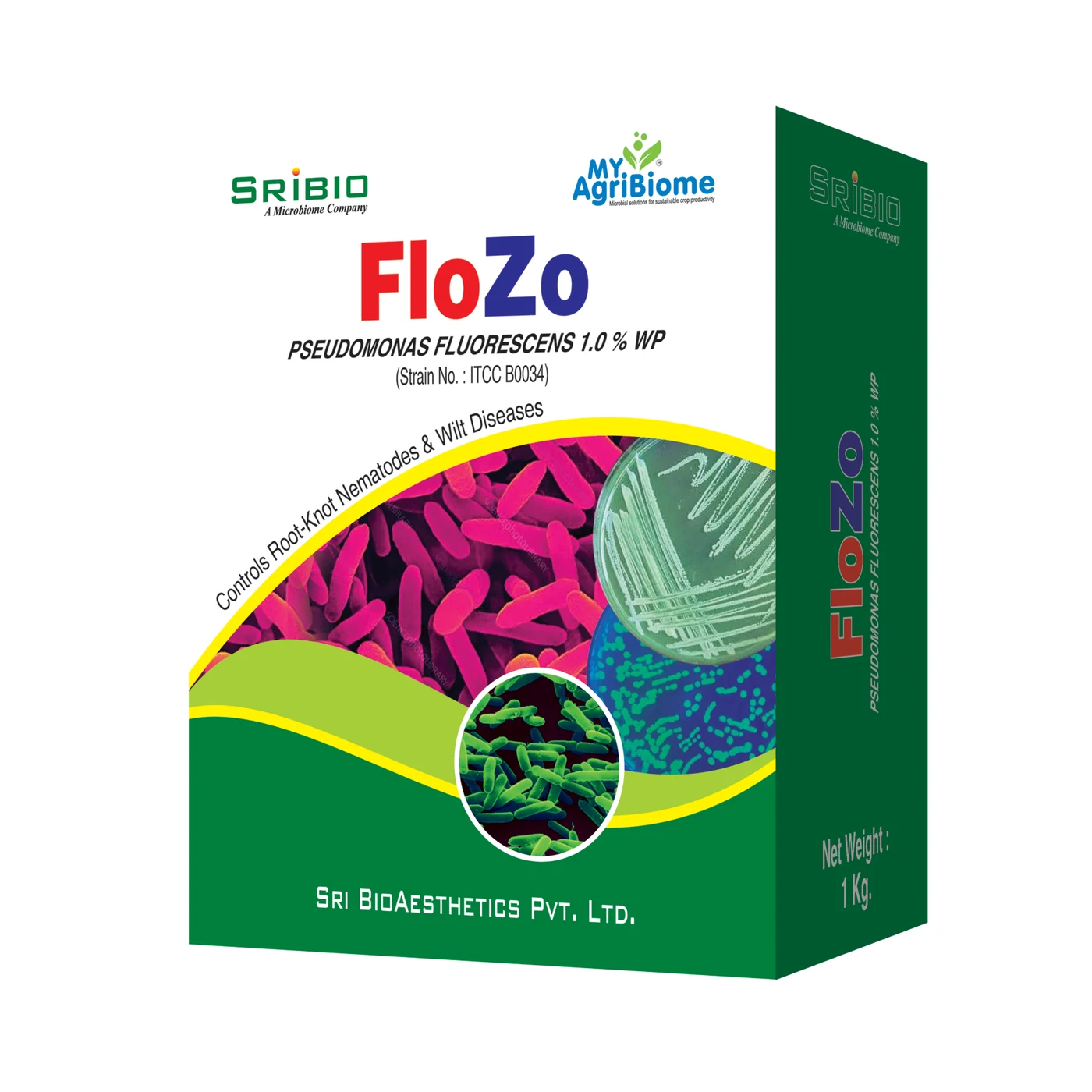
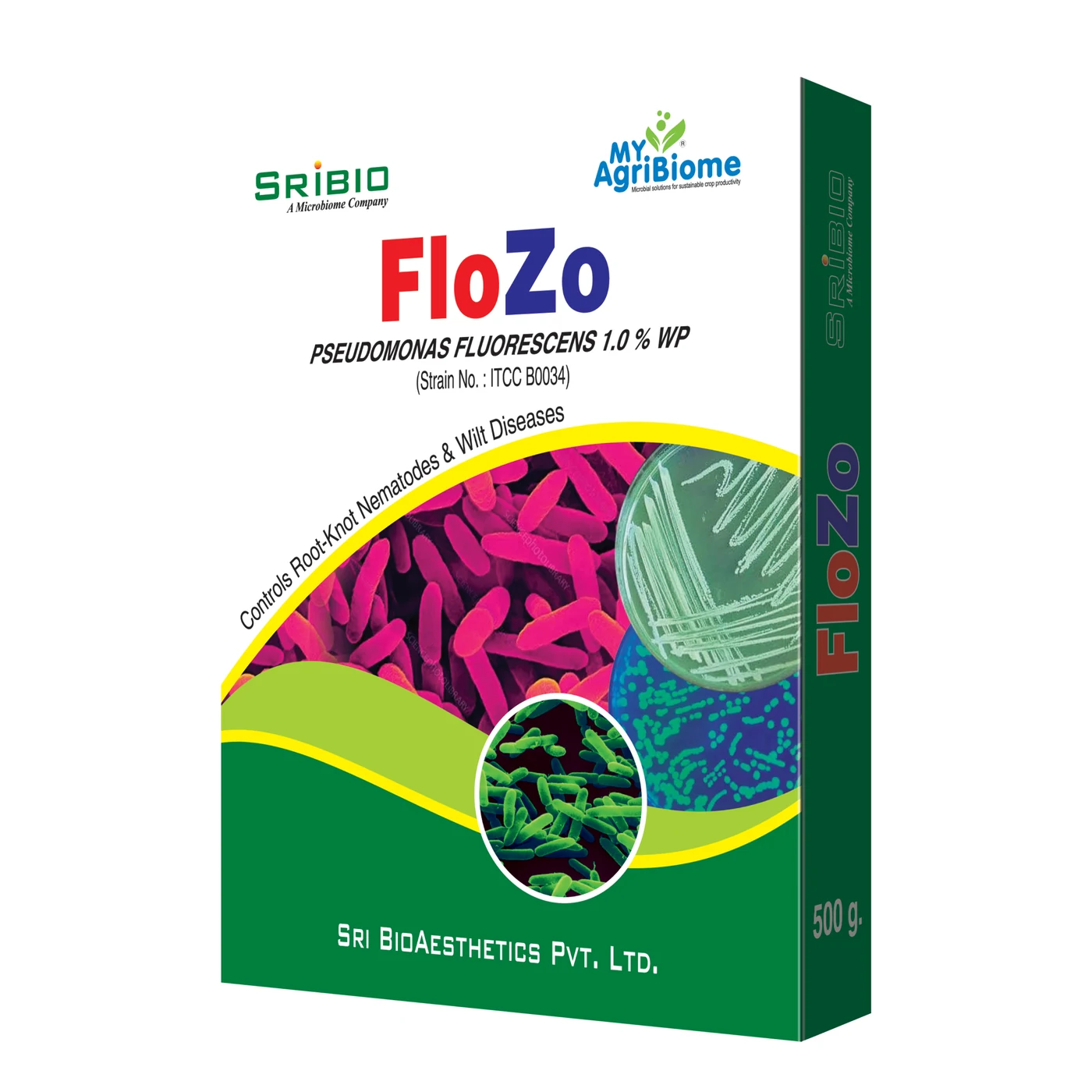
FloZo
Pseudomonas fluorescens 1.0% WP
FloZo is a selective Bio control agent which effectively controls root knot nematodes and Wilt diseases in Tomato and Bhendi crops .
Benefits
- FloZo Protects root zone from pathogenic fungi, enhances root and plant growth, improves nutrient use efficiency, and controls nematodes.
Dosage & usage
Tomato: Treat the seeds with FloZo @ 20 gm/kg of seeds & nursery beds @50 gm/sq. and apply @ 5 kg/hectare enriched FYM @ 5 tons / hectare to the soil before transplanting.
Okra: Treat the seeds with FloZo @ 20 gm/kg of seeds and apply FloZo @ 5 kg/hectare enriched FYM @5 tons/hectare to the soil before sowing.
Available packaging: 500 grams & 1000 grams
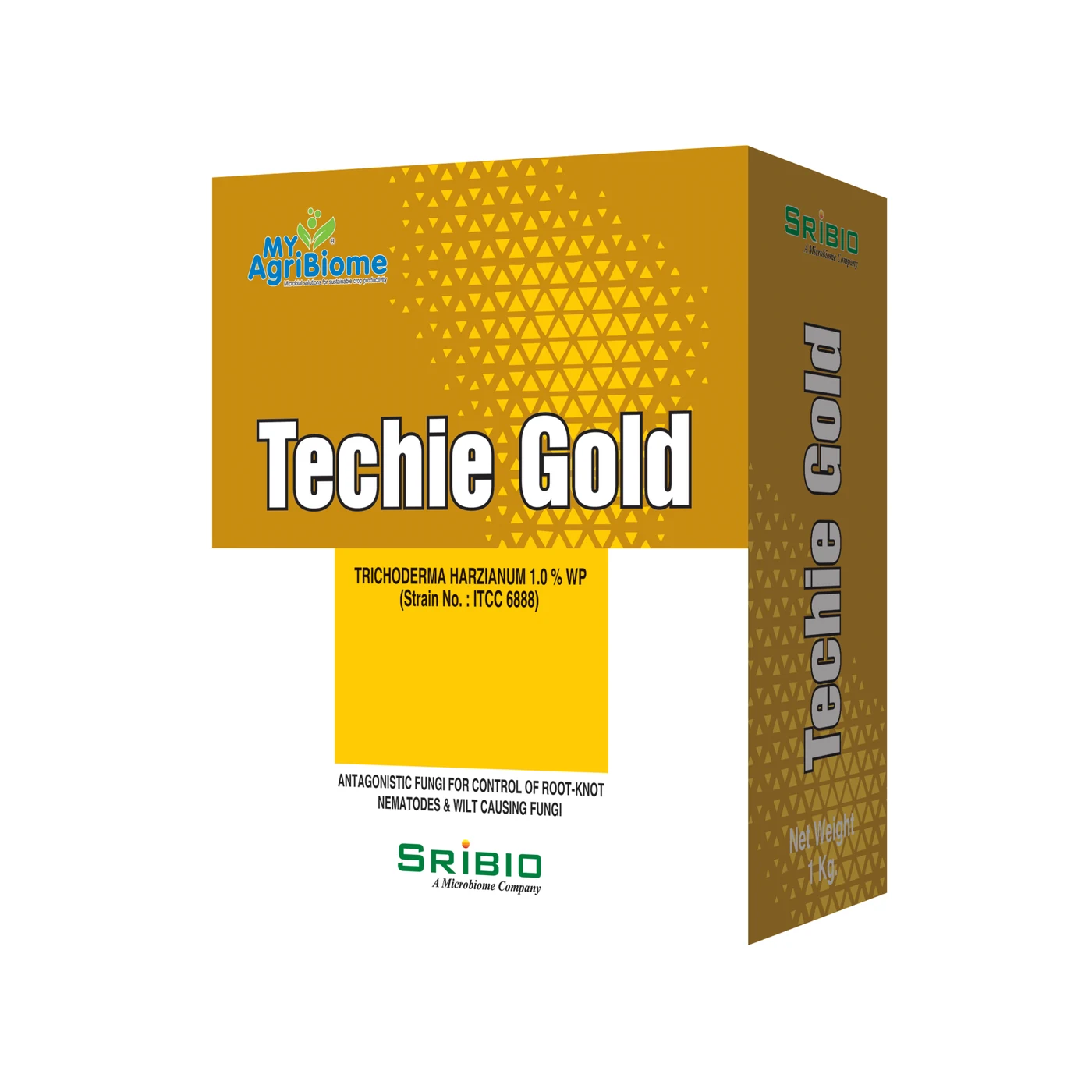
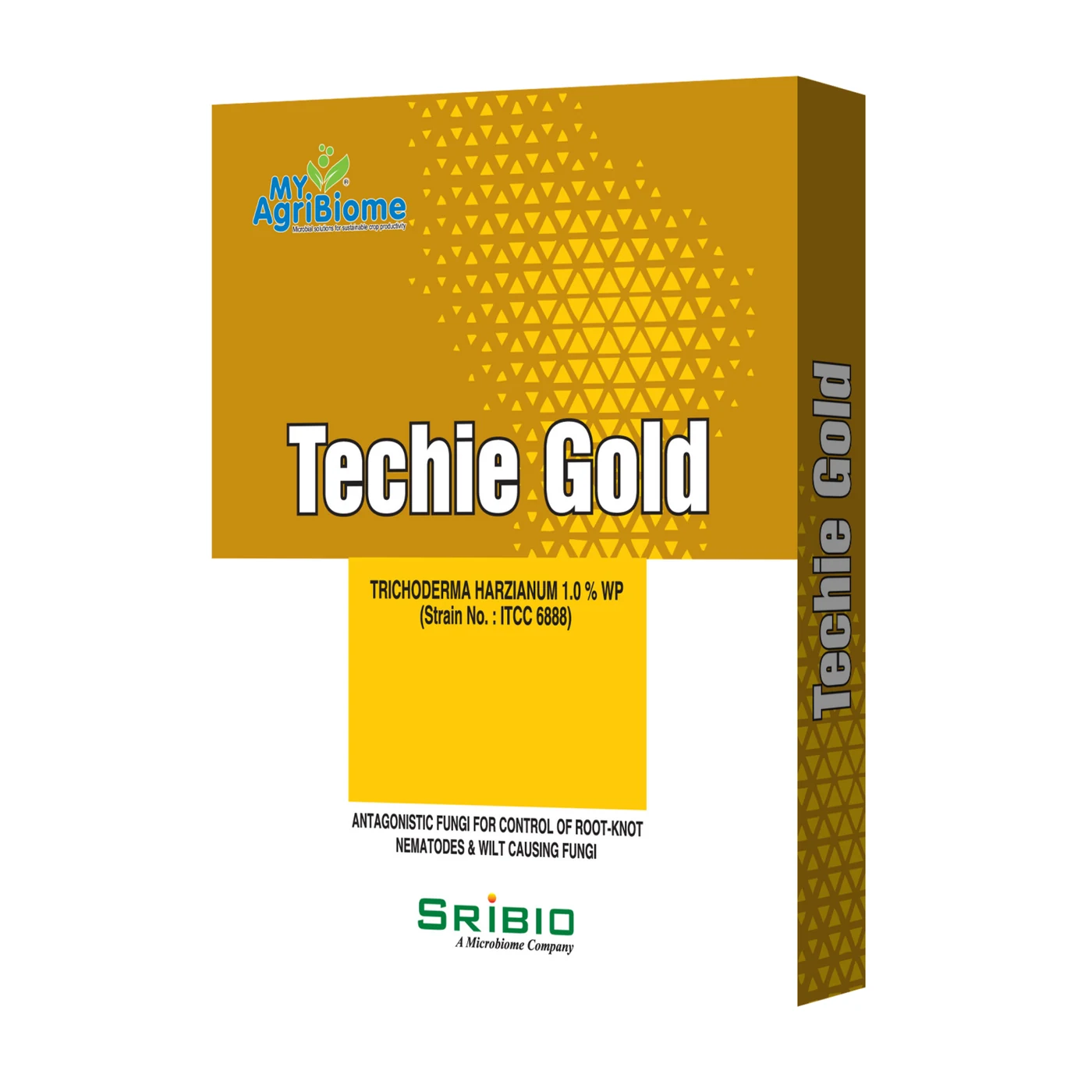
Techie Gold
Trichoderma harzianum 1.0% WP
Techie Gold is a Bio-control Fungus which protects the root system against disease caused by soil borne pathogens.
Benefits
- Techie Gold Protects root zone from pathogenic fungi, enhances root and plant growth, improves nutrient use efficiency, and controls nematodes.
Dosage & usage
Treat the seeds with Techie Gold @ 20 G/ Kg of seed and treat the nursery beds @ 50 g/sq.m and apply 5 tons FYM enriched with 5 kg Techie Gold / ha to the soil before transplanting in Tomato and Okra for Root-knot nematode& Wilt causing fungi.
Enrichment of field yard manure (FYM) with bio agent: add 5 kg of Techie Gold to 5 ton of FYM or compost to enrich it with bio- pesticides.
Available packaging: 500 grams & 1000 grams
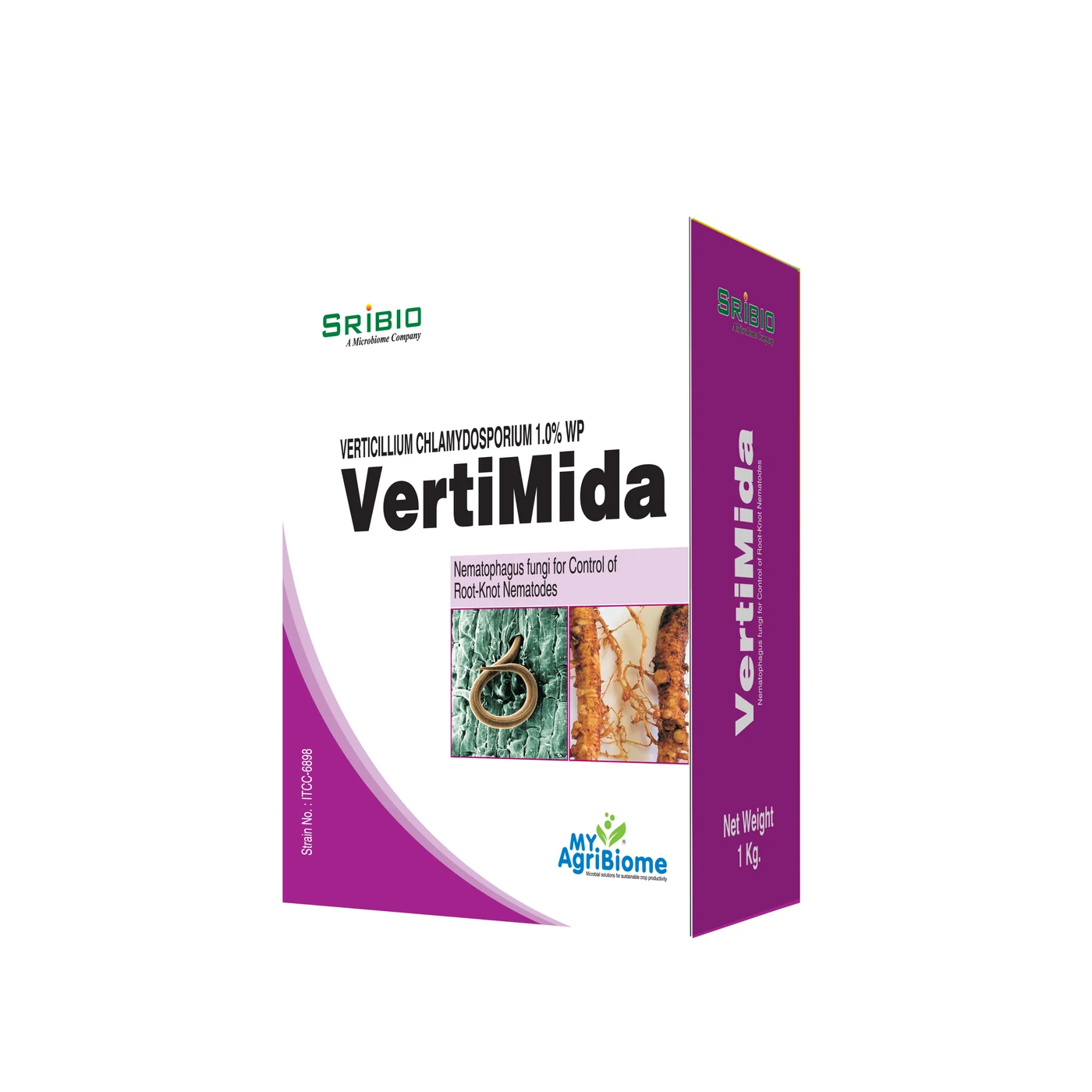
VertiMida
Verticillium chlamydosporium 1.0% WP
VertiMida is a nematophagous Verticillium chlamydosporium fungi.
Benefits
- VertiMida is a selective bio-control agent effective against root-knot nematodes.
Dosage & usage
Dosage :- 500 – 1000 grams per Acre. Treat 1 kg Seeds with 20 gms.
Usage :- Mix 500 -1000 grams in 150 to 200 Ltr. of water and drench near the root zone or mix with FYM & broadcast on the soil.
Available packaging: 500 grams & 1000 grams
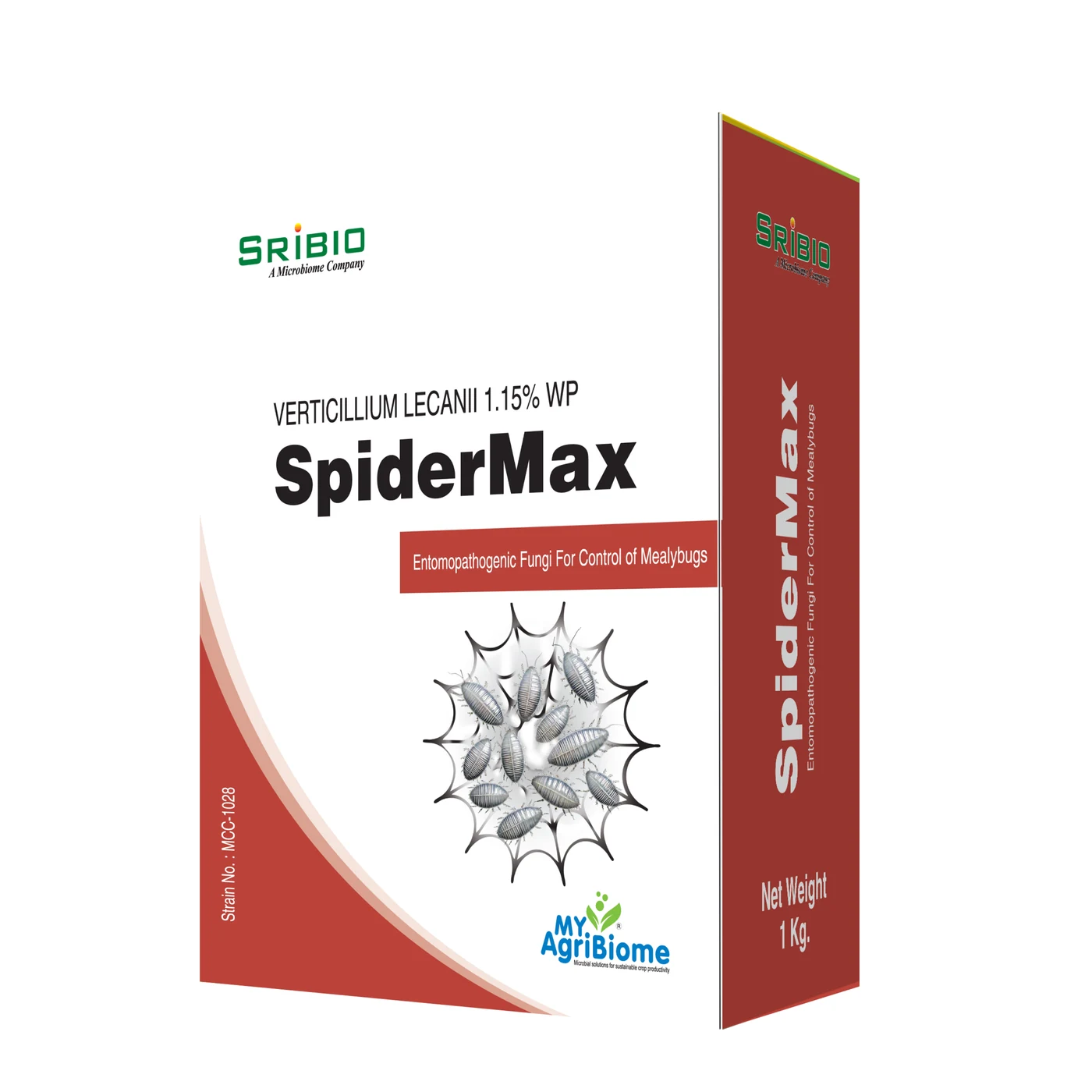
SpiderMax
Verticillium lecanii 1.15% WP
SpiderMax effectively controls mealybugs through contact infection, reduces pest population significantly
Benefits
- It helps minimize crop damage and enhances overall fruit quality and yield.
Dosage & usage
For one Acre Mix 500-1000 gr. in 150 to 200 Ltr. of water and spray uniformly over the crops during morning or evening hours.
Available packaging: 500 grams & 1000 grams
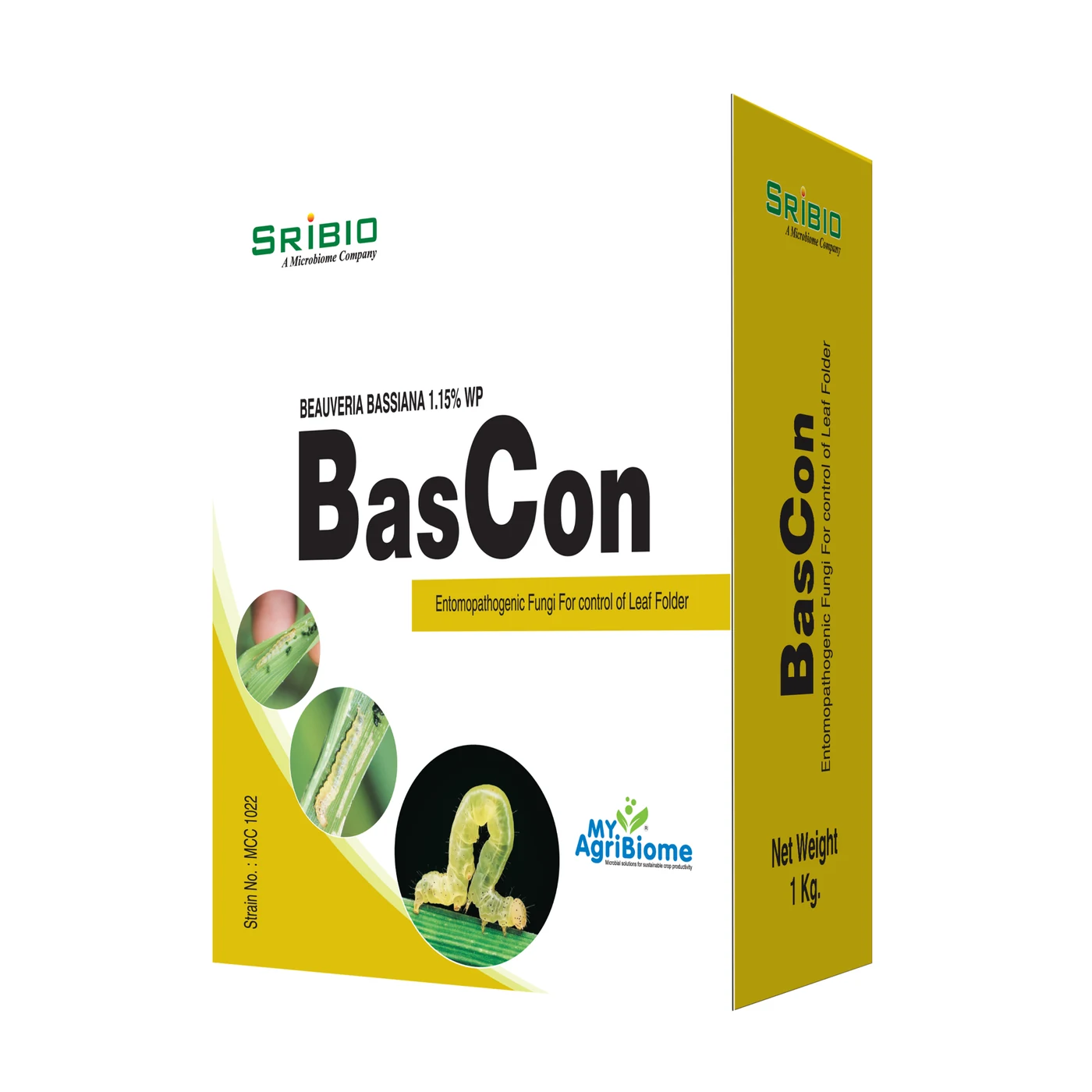
BasCon
Beauveria bassiana 1.15% WP
BasCon controls leaf folder larvae by direct infection, reducing crop damage and effective on many other larvae and many other Insects.
Dosage & usage
Dosage :- 500 – 1000 grams per Acre
Usage :- For one Acre Mix 500 -1000 grams in 150 to 200 Ltr. of water and spray uniformly over the crops during morning or evening hours.
Available packaging: 500 grams & 1000 grams
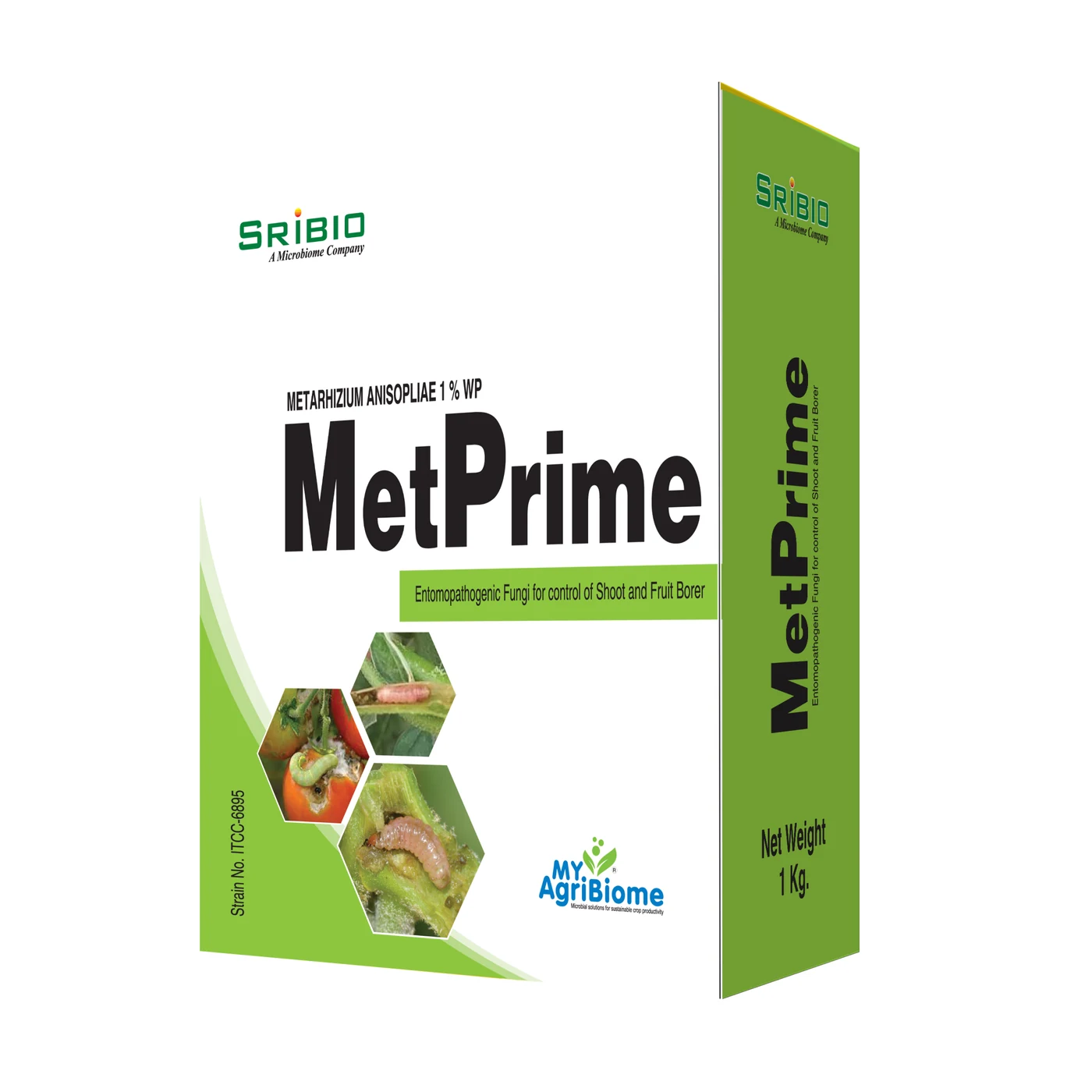
MetPrime
Metarhizium anisopliae 1% WP
MetPrime is an eco-friendly biopesticide containing indigenous isolate of entomopathogenic fungus Metarhizium anisopliae. It is a selective bio-agent which effectively controls shoot and fruit borer in brinjal crop.
Dosage & usage
Dosage :- 500 – 1000 grams per Acre
Usage :- For one Acre Mix 500 -1000 grams in 150 to 200 Ltr. of water and spray uniformly over the crops during morning or evening hours.
Available packaging: 500 grams & 1000 grams
How Trichoderma viride works
Open the diagram to view every stage and label at full size.
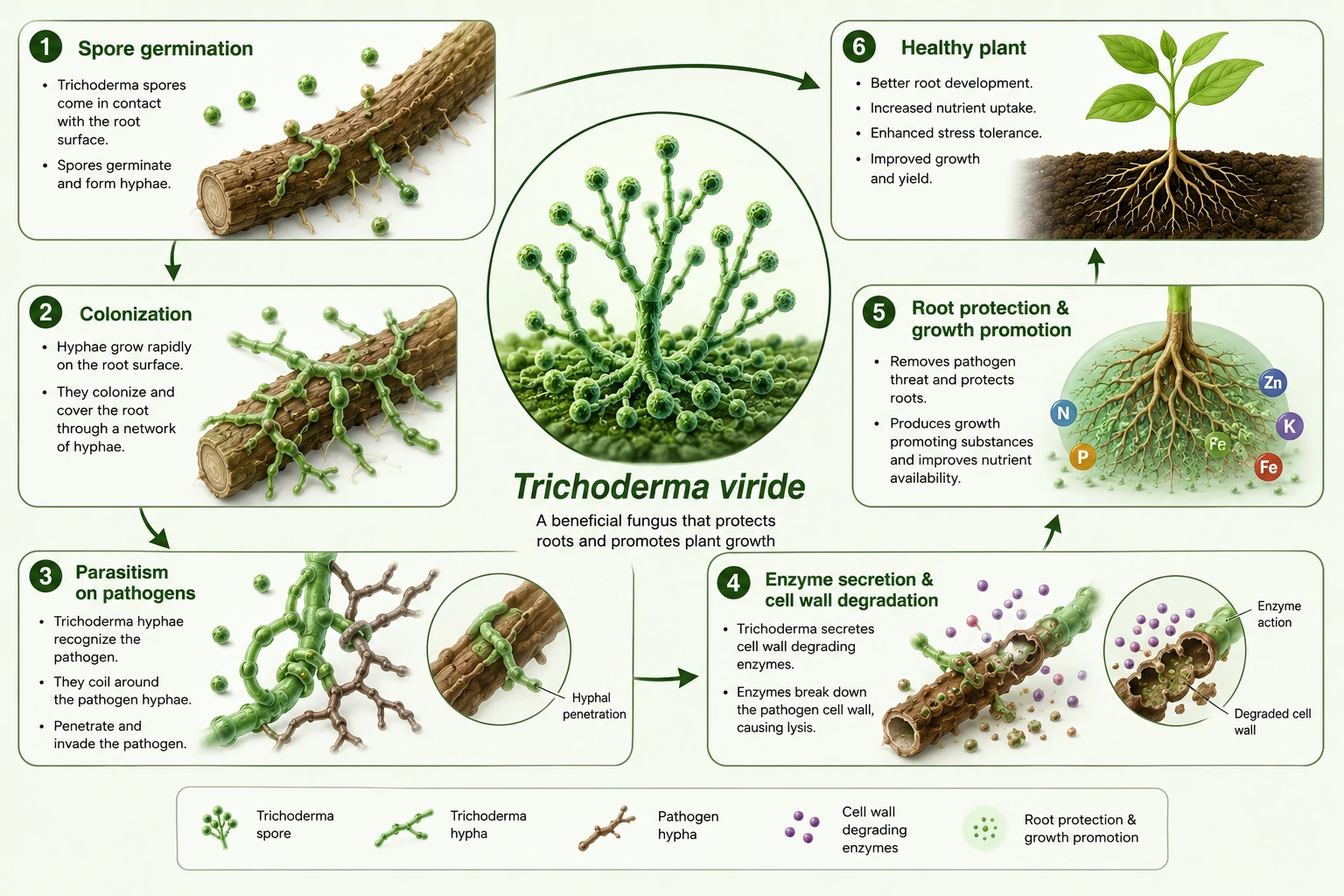
- Spore germination. Trichoderma spores come into contact with the root surface, germinate and form hyphae.
- Colonization. Hyphae grow rapidly on the root surface and colonize and cover the root through a hyphal network.
- Parasitism on pathogens. Trichoderma hyphae recognize the pathogen, coil around pathogen hyphae, and penetrate and invade the pathogen.
- Enzyme secretion and cell wall degradation. Trichoderma secretes cell wall degrading enzymes. These break down the pathogen cell wall, causing lysis.
- Root protection and growth promotion. Removes pathogen threat, protects roots, produces growth promoting substances and improves nutrient availability.
- Healthy plant. Better root development, increased nutrient uptake, enhanced stress tolerance, and improved growth and yield.
Related product: TriKing. Diagram legend: Trichoderma spore, Trichoderma hypha, pathogen hypha, cell wall degrading enzymes, root protection and growth promotion.
How Pseudomonas fluorescens works
Open the diagram to view every stage and label at full size.
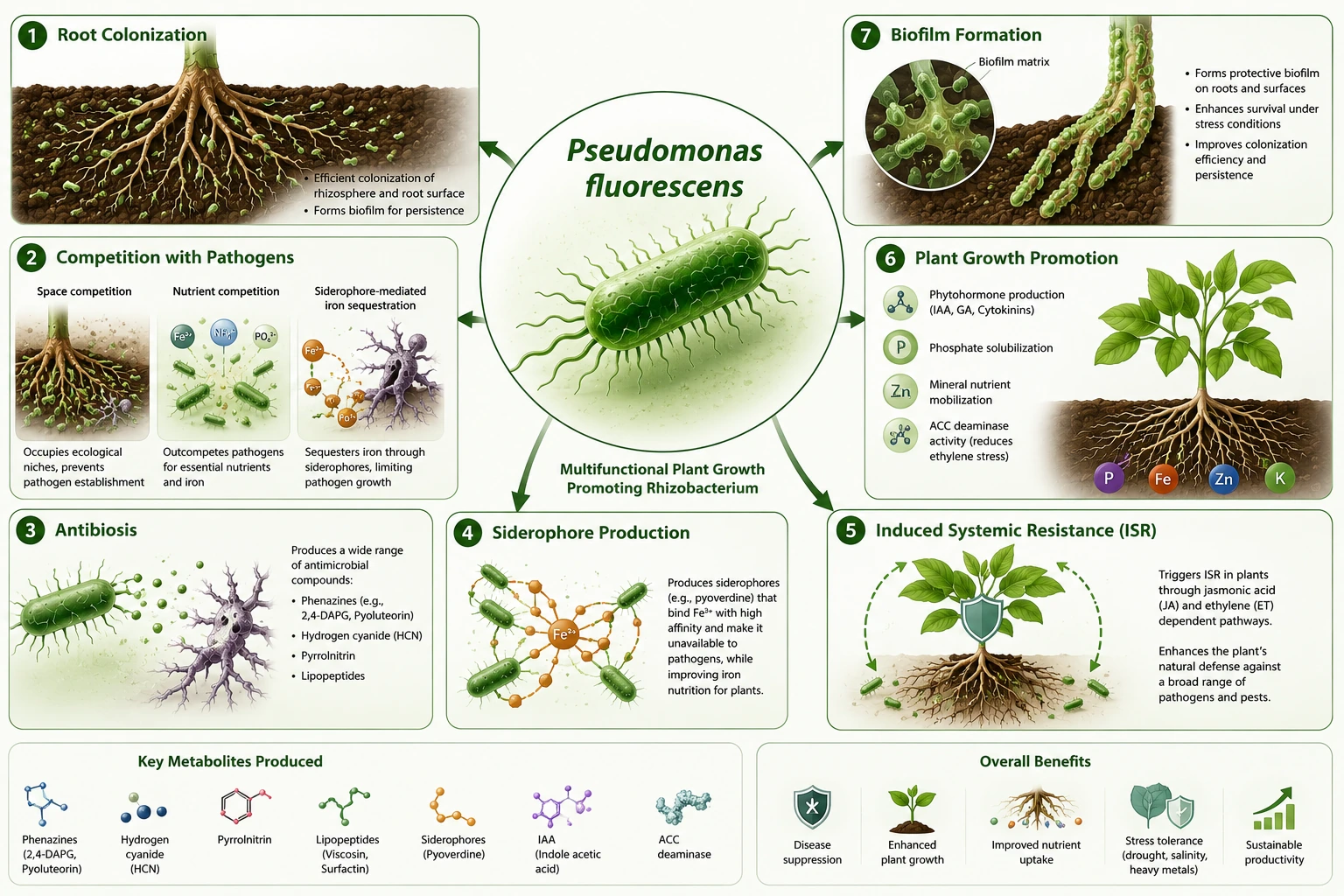
- Root colonization. Efficient colonization of the rhizosphere and root surface; forms biofilm for persistence.
- Competition with pathogens. Occupies ecological niches to prevent pathogen establishment; outcompetes pathogens for essential nutrients and iron; sequesters iron through siderophores, limiting pathogen growth.
- Antibiosis. Produces antimicrobial compounds including phenazines, 2,4-DAPG, pyoluteorin, hydrogen cyanide (HCN), pyrrolnitrin and lipopeptides.
- Siderophore production. Produces siderophores such as pyoverdine that bind Fe³⁺ with high affinity, making it unavailable to pathogens while improving iron nutrition for plants.
- Induced systemic resistance (ISR). Triggers ISR through jasmonic acid (JA) and ethylene (ET) dependent pathways, enhancing natural defenses against pathogens and pests.
- Plant growth promotion. Phytohormone production (IAA, GA and cytokinins), phosphate solubilization, mineral nutrient mobilization and ACC deaminase activity that reduces ethylene stress.
- Biofilm formation. Protective biofilms on roots and surfaces enhance survival under stress and improve colonization efficiency and persistence.
Key metabolites
Phenazines, 2,4-DAPG, pyoluteorin, hydrogen cyanide (HCN), pyrrolnitrin, lipopeptides (viscosin and surfactin), siderophores (pyoverdine), IAA (indole acetic acid) and ACC deaminase.
Overall benefits
Disease suppression, enhanced plant growth, improved nutrient uptake, stress tolerance (drought, salinity and heavy metals), and sustainable productivity.
Related product: FloZo.
Find the right product for your crop
Contact the SRIBIO team for product enquiries and application guidance.